



Skip to Store Area:

Get FREE ground shipping within the continental USA on qualifying orders!

Alcohol Math: Who Gets Drunk and Why

August 2, 2011 9:48:54 AM CDT

Beer in various types of glasses

How much alcohol does it take to get intoxicated?

Many people figure a few beers at a ballgame or a couple of glasses of wine with dinner won't put them over the legal limit for driving. But how alcohol affects people is highly individual, with a number of factors in the mix.

Melinda Beck, a writer for the Wall Street Journal Health Journal has done some great research and has written an article about who gets drunk and why.  Read the full article.

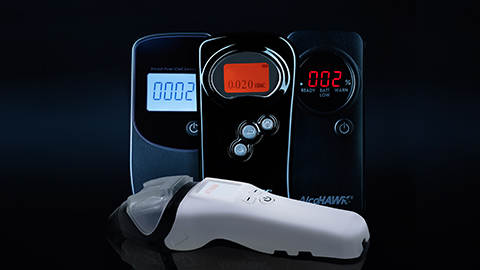
We'd also like to thank Melinda Beck for using the AlcoHAWK Slim Digital Alcohol Breath Tester in her testing of individuals.

-

Source: Wall Street Journal Health Journal, Who Gets Drunk and Why

-

0 Comments | Posted in News By Q3 Innovations
Gastric Bypass Illustration
Gastric Bypass Surgery

Gastric bypass surgery reduces the stomach to a small pouch and bypasses part of the small intestine, so less food will be absorbed when it passes through the gut. Changes in the way the body absorbs and metabolizes alcohol after gastric bypass mean these patients need less alcohol to register intoxication on a breathalyzer, says a study published recently in the Journal of the American College of Surgeons.

After drinking a single 5-ounce glass of red wine before their surgery, the study's 19 subjects had an average breath alcohol content of .024% -- well below the level at which most states consider a driver intoxicated.

Three months after surgery, the same glass of red wine resulted in an average breath alcohol content of .059%, and six months post-surgery, the group averaged .088%, which surpasses the .08% widely recognized as the legal threshold for intoxication.

It also took longer for patients to return to complete sobriety in the wake of that drink: Pre-operation, it took subjects 49 minutes to return to complete sobriety after a glass of wine; three months after the operation, it took  61 minutes for that to happen, and six months after surgery, it took 88 minutes.

As always, get to know your body and how it reacts to alcohol by using a breathalyzer.

-

Source: Los Angeles Times, Gastric bypass and alcohol: Mix with caution

4 Comments | Posted in News By Q3 Innovations

Prom season tips for parents and their teens

March 10, 2010 12:15:40 PM CST

Teens heading to prom on bicycles
Photo by solamore

As teenagers anxiously await prom celebrations, nervous parents are hoping their children celebrate safely and responsibly. Curfews may be broken, seat belts forgotten, and alcohol consumed. What should be a happy time for students might be remembered for all the wrong reasons.

To help teenagers make it safely to and from a celebration, Allstate Insurance Company recommends the following tips:

Plan an alternate source of transportation—arrange for a cab or a limousine.

Limit the number of passengers in your teenager's car—more passengers create more potential distractions for the driver.

Prohibit driving under the influence—underage drinking and driving is against the law. Make it clear to your teens that if they drink or use drugs, driving privileges will be revoked.

Establish an SOS—teens make mistakes and sometimes get themselves into dangerous situations. Make sure your teens have a responsible adult they can call if they feel they shouldn't be driving or are riding with another young driver who shouldn't be driving.

Reduce distractions—make sure your teen agrees not to eat, drink, or use a cell phone while driving.

Buckle up—teens, more than any group of drivers and passengers, don't use seatbelts.

Check the condition of your teen's car—make certain your teen is driving a car in good condition.

-

Source: WAFF Channel 48 News, http://www.waff.com/Global/story.asp?S=12103114

-

If you are a parent wishing to test your teen for the precense of alcohol, we recommend the effective and affordable AlcoHAWK Slim.  Got and idea not mentioned? Leave a comment with your tips and suggestions.

0 Comments | Posted in Helpful Tips By Q3 Innovations
NHTSA Traffic Safety Research Note

In December 2009 the NHTSA released the report "Fatalities and Fatality Rates in Alcohol- Impaired-Driving Crashes by State, 2007-2008."

The report says that in 2008, as compared to 2007, the overall fatality rate declined from 1.36 to 1.25 fatalities per 100 million vehicle miles of travel (VMT), a decrease of 8%, and the alcohol-impaired driving fatality rate declined from 0.43 to 0.40 fatalities per 100 million VMT, a decrease of 7%. From 2007 to 2008, the alcohol-impaired-driving fatality rate declined in 40 States, the District of Columbia and Puerto Rico and remained the same or increased in the remaining 10 States. An alcohol-impaired-driving crash is defined as a crash involving at least one driver or motorcycle rider (operator) with a blood alcohol concentration (BAC) of .08 grams per deciliter (g/dL) or higher.

View the full report here

These results are encouraging, and the overall vehicle fatality rates for the first half (January-June) of 2009 look promising as well.

-

Don't forget to leave a comment.

1 Comments | Posted in News By Q3 Innovations